Your Tech Office Isn’t a Utopia. It’s a Very Nice Way to Forget to Go Home.
The Perk Is Real. So Is the Trapdoor Under It.


The tech-office vlog begins the same way every time: badge tap, glass atrium, iced matcha, breakfast bar, aesthetic elevator. Then comes lunch—sushi, naturally—followed by a rooftop garden, a gym, perhaps a nap pod shaped like an apology from a Scandinavian furniture company.
Actual work gets three seconds of keyboard clacking, filmed at an angle that suggests the spreadsheet has great cheekbones.
This is not necessarily deception. Debugging code, navigating a brutal performance review, or getting pinged by Slack during dinner lacks the visual punch of a kombucha tap. Confidentiality prevents people from filming much of their real work anyway. And yes, people can genuinely enjoy free food, good colleagues, and an office that does not resemble a fluorescent hostage situation.
But these videos have trained us to confuse a pleasant place to work with a good way to live.
A catered lunch is visible. Control over your evening is not.
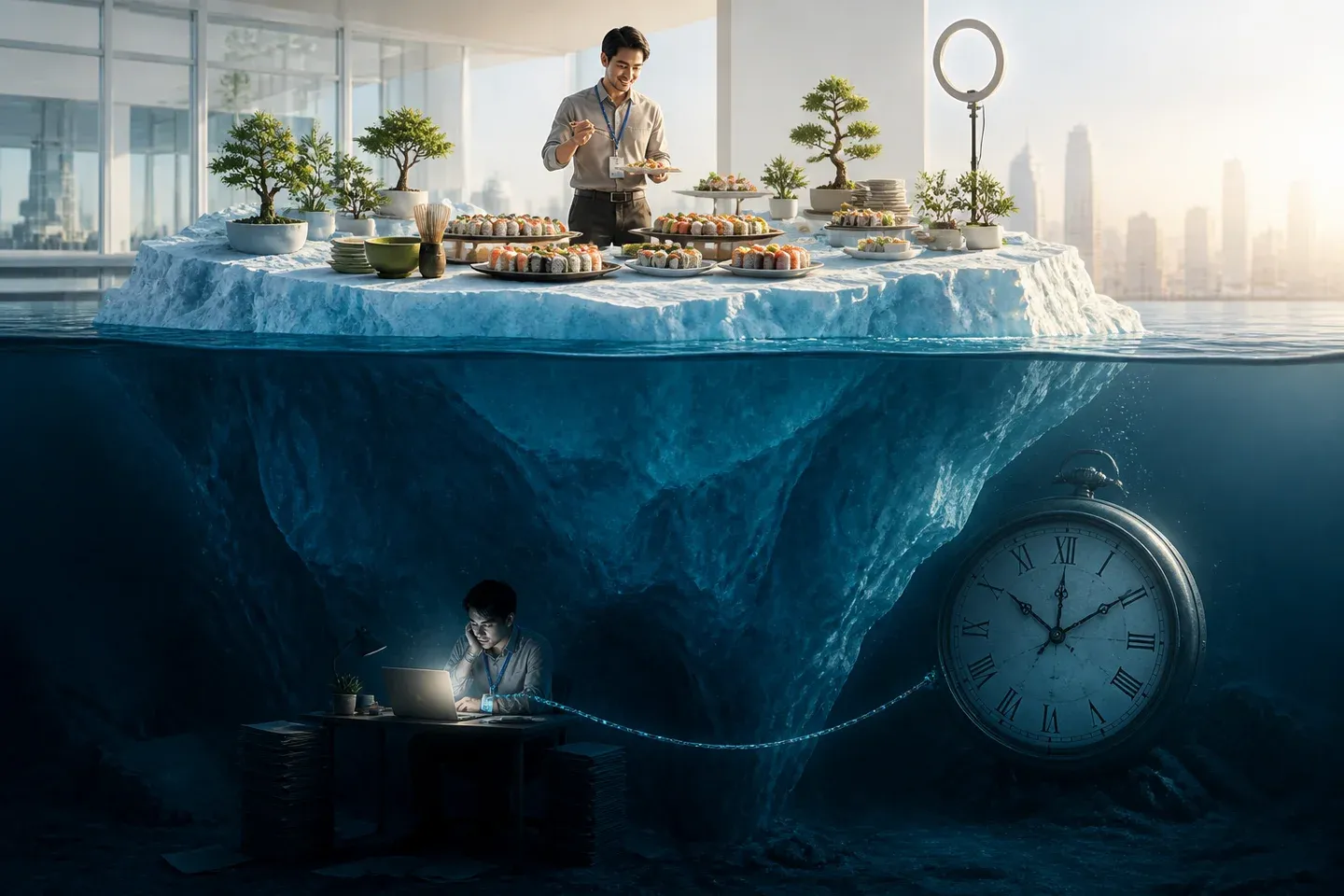
The poke bowl has an excellent benefits package.
Let’s be clear: free dinner has value. So do shuttles, gyms, package pickup, dry cleaning, health services, childcare support, and a place to sit that isn’t your kitchen table beside a pile of laundry with opinions.
For people with long commutes or demanding schedules, these things can save money, time, and aggravation.
But an office can also become suspiciously good at solving every problem caused by being at the office.
| The company provides | What it can quietly make easier |
|---|---|
| Breakfast | Arriving early |
| Lunch | Never leaving campus |
| Dinner to go | Staying late |
| Gym and wellness rooms | Treating exhaustion at its source: work |
| Shuttles and errands | Organizing your entire life around the job |
No manager has to declare, “You will now remain here until 8 p.m., citizen.” That would be gauche. Instead, the company offers dinner, your team gathers around it, and suddenly leaving at 6 feels like declining to help move a couch.
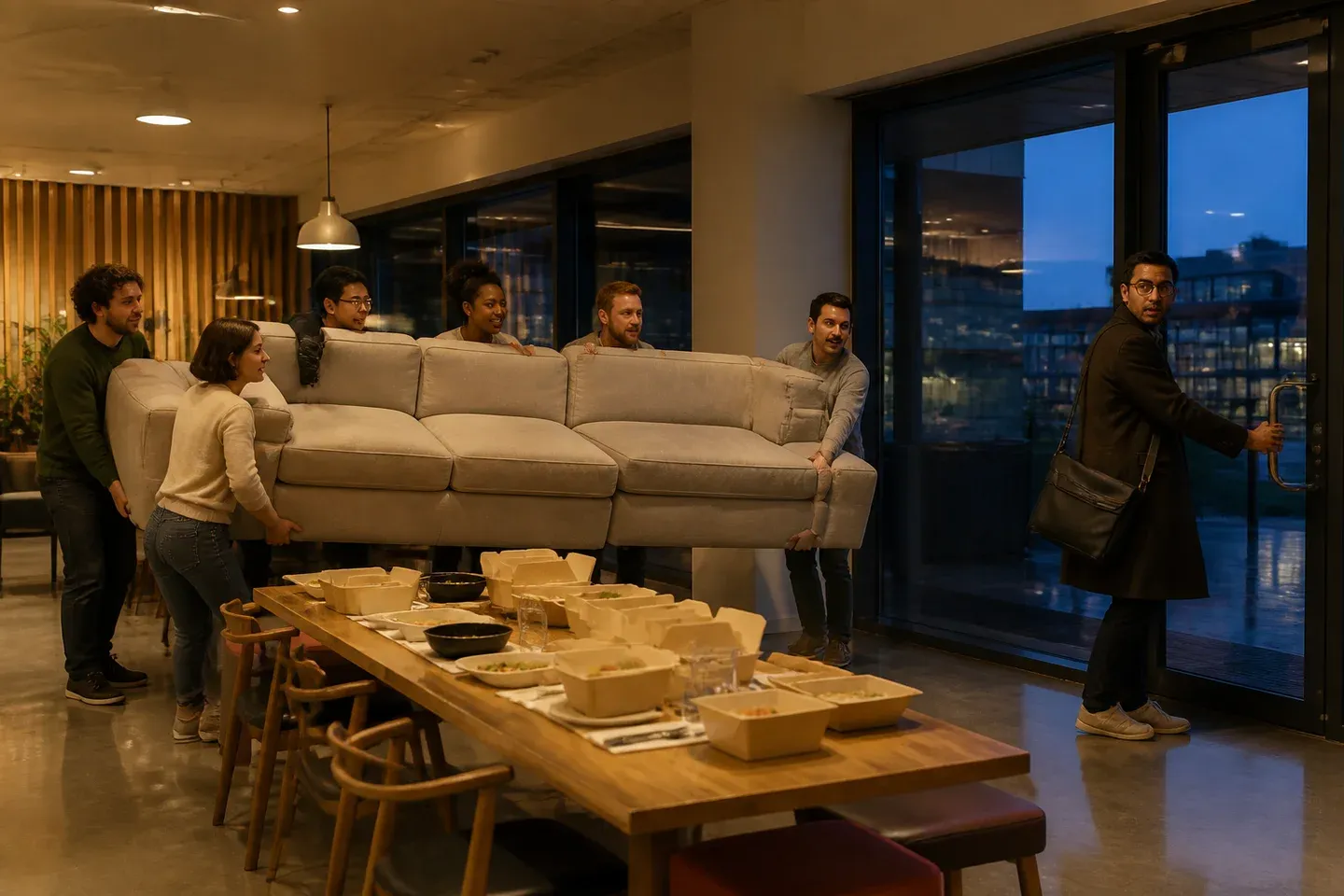
Nobody asked you to stay. The couch simply developed needs.
The pressure is cultural, not always explicit. That makes it harder to name—and easier for employers to deny.
We’re making work-life balance easier!
By moving more of your life into work.
The crucial question is not whether the sushi is free. It is this:
If the dinner program vanished tomorrow, would people go home earlier—or just get hungrier at their desks?
The Real Luxury Is Not Having to Eat Dinner at Work
The office-perk fantasy hits a nerve because viewers understand what the montage carefully crops out.
For somebody working shifts, commuting two hours, caring for a parent, raising children, cobbling together two jobs, or simply trying to see their friends before everyone turns into a profile picture, the glamorous part is not the avocado toast. It is the apparent abundance of time.
Time to drink coffee slowly.
Time to sit for lunch.
Time to go to the gym before dark.
Time to leave with dinner “solved.”
Except that last one can be a warning label.
A free $20 meal cannot cleanly replace:
-
A predictable schedule.
-
Higher pay.
-
Paid leave and health coverage.
-
The right to ignore Slack after work.
-
A commute that does not eat a small, tender chunk of your lifespan.
-
The ability to decide where—and with whom—you spend your evening.
Perks are not freedom. A massage chair cannot negotiate your workload. It can merely hold you gently while you answer messages.
Google Didn’t Invent This. It Just Put Better Lighting on It.
In the talent-war years, companies such as Google made the lavish campus culturally iconic: gourmet food, cafés, gyms, shuttles, sprawling offices designed to make leaving feel vaguely impractical. Other tech firms eagerly built their own versions of the all-inclusive resort, except the minibar contains sparkling water and your keycard opens Jira.
There are echoes here of older company-town and employer-welfare arrangements: the employer does not just pay you; it increasingly organizes how you eat, travel, socialize, exercise, and spend your waking hours.
Modern tech employees are not coal miners trapped by a company store. Many are well-paid, skilled, and legally free to quit. That distinction matters.
So does this one: when your job supplies your meals, friends, transport, status, identity, and maybe the person you date, leaving costs more than leaving a paycheck.

Quitting is easy; just unplug your entire food chain.
Researchers have words for this—identification, normative control—but normal people can call it what it feels like: gratitude with a calendar invite attached.
The nicer the workplace is, the more awkward it can feel to admit that it is consuming your life.
And Who Exactly Is Enjoying the Rooftop?
The office vlog’s cleanest trick is selective casting.
The person eating free sushi may be a salaried engineer, designer, or product manager with autonomy, equity, and a handsome-enough salary to survive an expensive city. But that tidy ecosystem often runs on cafeteria workers, janitors, security guards, shuttle drivers, delivery workers, temps, and contractors.
Their schedules, wages, benefits, job security, and access to the shiny stuff may look very different.
So may the experience for:
-
Remote workers, who get none of the campus pageantry.
-
Disabled workers, for whom office-centered policies can create barriers rather than belonging.
-
Parents and caregivers, for whom the only useful perk may be leaving on time.
-
Workers in expensive metro areas, where a large nominal salary can get mugged by rent before it reaches the grocery store.
A company can spend lavishly on an office while treating its workforce as a tiered amusement park: some get the rooftop garden, some get the service entrance.
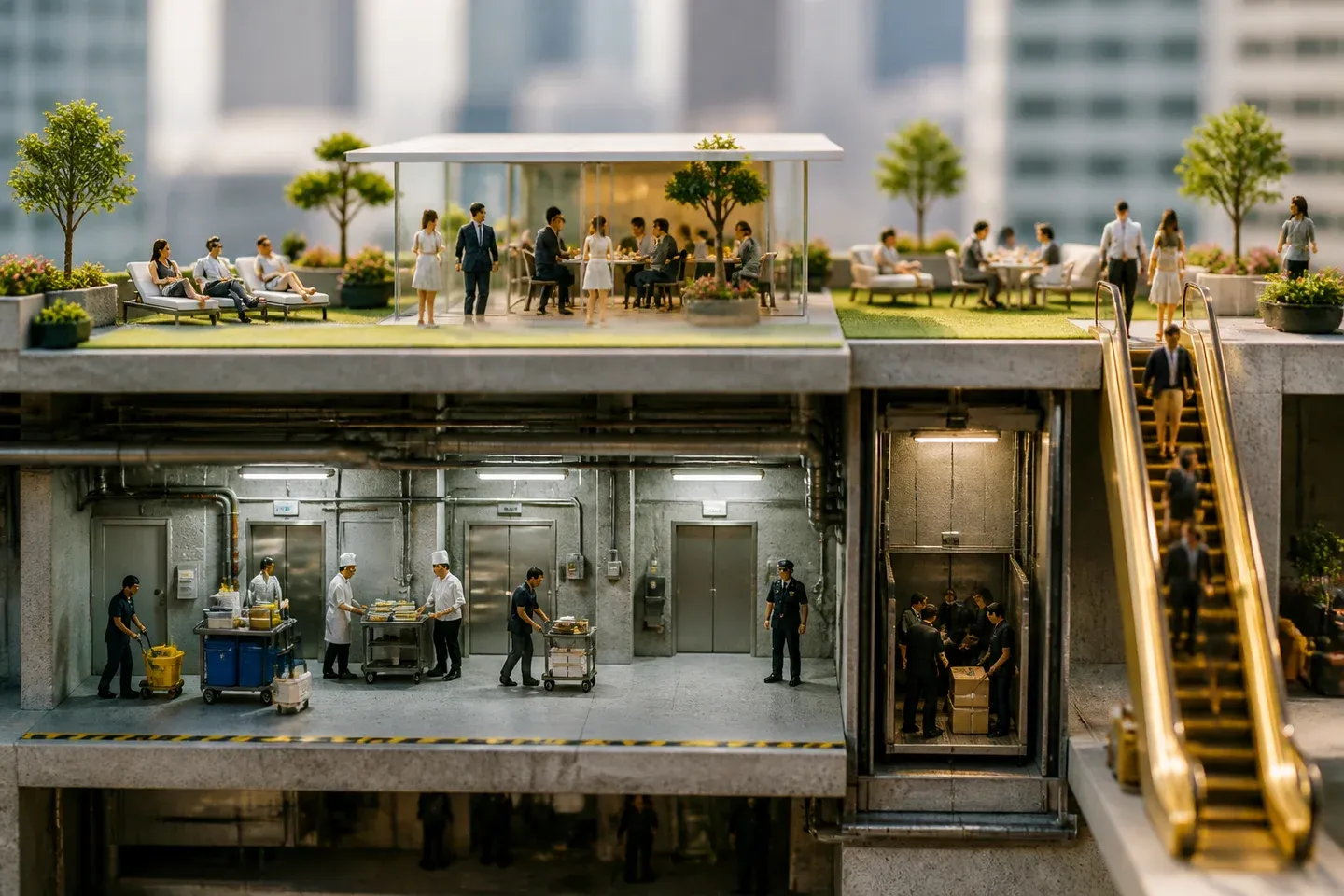
Same campus, wildly different wristbands.
The 2013 and 2014 protests over private tech commuter buses in San Francisco captured the larger problem. The buses made individual commutes easier. But they also became symbols of a city increasingly arranged around private routes between expensive housing and insulated corporate campuses. The bus was not the problem. It was the problem wearing Wi-Fi and tinted windows.
Perks Are Not a Social Contract. Ask Anyone Who Got Laid Off.
Since the tech downturn that began in 2022, companies have cut food programs, wellness budgets, office services, and real-estate footprints—often while laying people off and pushing others back into offices.
Which revealed a fact nobody should have needed revealed: the snack wall was never a constitutional right.
Amenities are management choices. They can disappear when budgets tighten, while the return-to-office policy somehow remains carved into granite.
This is why “come back for collaboration, community, and our excellent espresso machine” lands differently when workers have discovered that remote work gave them something the office cannot cater: usable time.
An attractive office may be a good place to collaborate. It may also be a beautifully furnished argument for why your employer should control your commute, your meals, and several more hours of your week.
Both can be true. That’s the irritating part.
A Snack Wall Cannot Answer the Questions That Matter
A 45-second day in my life cannot tell you whether its creator began at 7 a.m., is on call tonight, recorded during a rare quiet day, or will reopen Slack from bed. Knowledge work has a special talent for looking flexible while leaking into every available crack in the day.
So judge the job by the unfilmable stuff:
-
Can people refuse late work without career damage?
-
Is the workload manageable without eating at a desk?
-
Do employees actually take vacation?
-
What are the on-call rotations and after-hours expectations?
-
Is return-to-office optional in practice—or only in the same sense that a hostage “chooses” a negotiator?
-
Are pay, leave, health care, severance, and job security good without the artisanal granola?
-
Do contractors and support staff get fair conditions too?
A snack wall tells you a company can buy snacks.
It tells you almost nothing about whether you are free to leave.
The best employers do not need to make offices miserable to prove they respect boundaries. Feed people. Offer shuttles. Build lovely spaces. Fine. But pair the perks with adequate staffing, fair wages, genuine flexibility, paid leave, transparent promotion, and a credible right to disconnect.
The matcha is real. The sushi is real. The rooftop garden is probably delightful.
But the actual luxury is much less cinematic: enough security and autonomy that when you leave the beautiful office, you do not feel like you are abandoning your life.
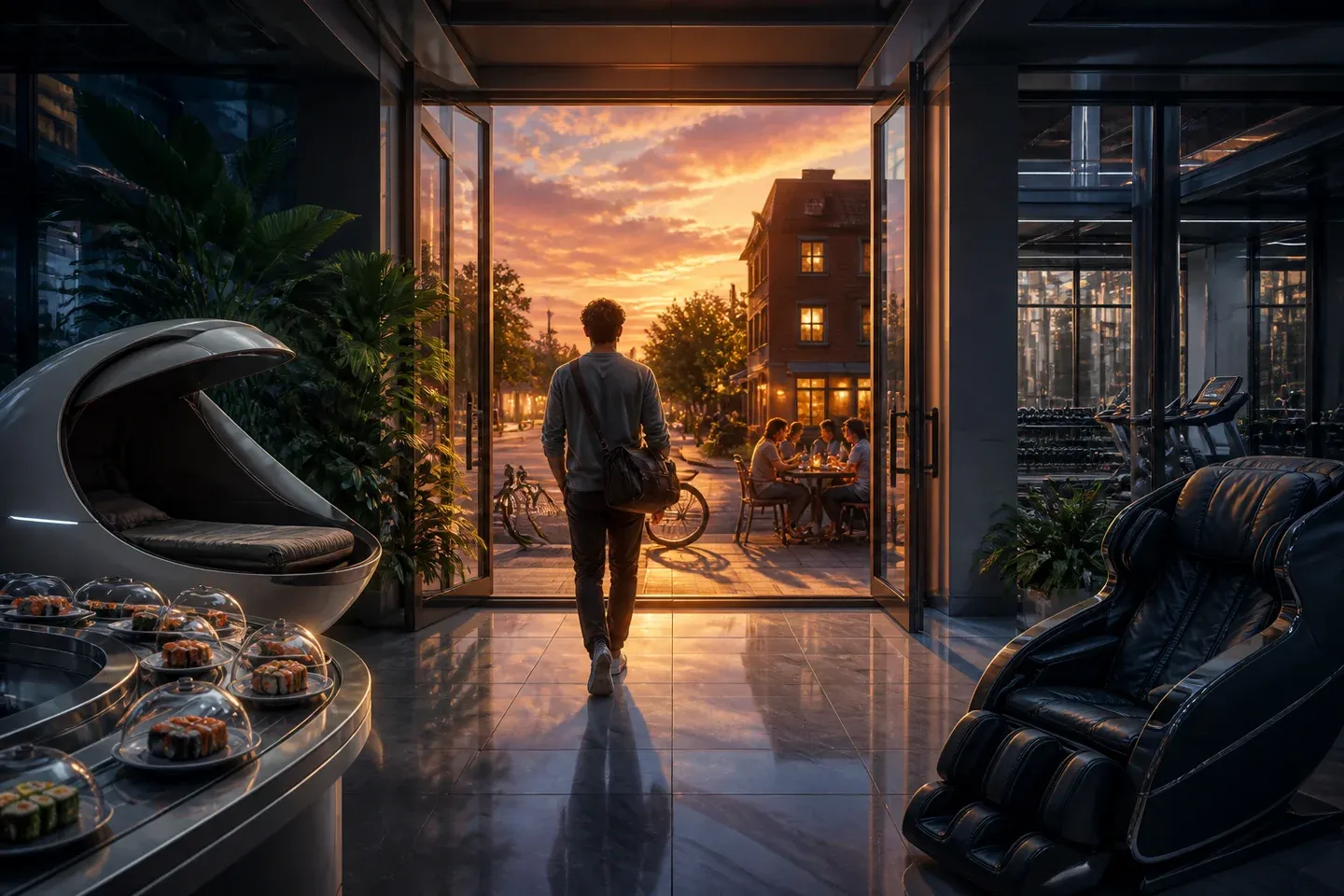
Somewhere, a nap pod is taking this personally.