Your Uber Earnings Are Not a Paycheck. They’re a Car Slowly Being Eaten.
The App Pays You in Numbers; the Car Collects in Reality


At the end of a Friday night, the app flashes: $180 earned.
A small digital casino bell goes off in the driver’s brain. Nice. Rent exists another week. Groceries can happen. Maybe the terrifying light on the dashboard is merely a suggestion.
But that $180 is not wages. It is gross revenue from a tiny transportation company whose fleet consists of one increasingly exhausted Honda—owned, financed, fueled, insured, cleaned, and eventually buried by the person holding the phone.
The platform owns the brand, the customers, the payment system, the demand data, the dispatch machine, and the right to change the rules whenever it feels like rearranging the furniture in a building it does not live in.
The driver gets the car. And the repair bill.

Congratulations: you’re both the fleet and roadside assistance.
The seduction is simple: work when you want. Need cash Tuesday at 2 p.m.? Tap Go Online. Have school, kids, a second job, or an emergency? The flexibility is real.
So is the arithmetic waiting in the parking lot.
That $180 shift may involve:
-
$25 in fuel
-
unpaid miles driving to pickups, repositioning, returning from dead zones, and going home
-
tires, brakes, oil, filters, wipers, suspension, cleaning, tolls, parking, and phone service
-
insurance gaps depending on whether the app is off, on, waiting, picking up, or carrying someone
-
loan payments, interest, and the resale value quietly leaking out of the vehicle
-
self-employment tax: 15.3% on net earnings for Social Security and Medicare
A tax deduction is not reimbursement. It is not a cheerful little coupon the IRS hands you at the tire shop.
“Great news: your transmission failure may be partially relevant during next year’s paperwork.”
That is not cash. That is bureaucracy offering condolences.
Suppose the app pays $180, tips included, over 180 total miles. Fuel costs $25. Now there is $155 left before maintenance, depreciation, insurance, taxes, cleaning, financing, and the future moment when the car announces it has entered its expensive feelings era.
If the shift took nine or 10 hours once waiting, refueling, cleaning, and app-related nonsense are included, the glowing $180 tells us roughly as much about the actual hourly return as a restaurant menu tells us about the dishwasher’s rent.
“Be Your Own Boss” Means the Boss Owns Everything Except the Problem
Gig work calls this independence, which is a lovely word that has been asked to do some extremely dishonest lifting.
A real independent business owner generally has meaningful control over prices, customers, strategy, and terms. They can negotiate. Build relationships. Decide which clients to keep. Raise rates when costs rise. Take their customer list somewhere else.
The app driver can often choose whether to accept a trip. That is something. But it is not much like setting the terms of a business when:
| The platform controls | The driver absorbs |
|---|---|
| customer access | vehicle depreciation |
| fares or fare structure | fuel and maintenance |
| dispatch and visible offers | idle time |
| bonuses, streaks, and incentives | accident and repair exposure |
| ratings and performance rules | income volatility |
| deactivation access | the consequences of losing it |
The driver owns the machine. The platform owns the market in which the machine is allowed to make money.
And unlike a regular business, the driver usually cannot build an independent customer list from the work. The passenger belongs to the app. The order belongs to the app. The demand data belongs to the app. The relationship belongs to the app.
What the driver retains is a personal vehicle now being operated like a commercial asset—while still needing to pick up children, get to another job, reach a medical appointment, or survive the ordinary chaos of life.
That is less “entrepreneurship” than being handed a franchise where the corporation owns the store and you own the roof leak.

A business model with all the prestige of catching rain indoors.
The Unpaid Shift Is the Whole Point
The paid trip is only the glamorous visible slice: passenger in car, food in back seat, map talking like a disappointed aunt.
The work also includes:
-
Driving toward the pickup.
-
Waiting for a request.
-
Repositioning after a drop-off.
-
Escaping an area where there is no next ride.
-
Refueling or charging.
-
Cleaning the car.
-
Arguing with support when the app does something app-shaped.
Much of that time is paid less than active-trip time or not at all. Yet the vehicle keeps accumulating mileage, wear, and the kind of future obligations that do not accept motivational language as payment.
The IRS mileage rate exists as a tax benchmark because operating a car costs money. It is not a wage floor, an app guarantee, or a little government acknowledgment that every mile was profitable. Costs vary by car, financing, roads, fuel prices, and repair markets. But the central fact is stubbornly unsexy:
Miles are not free because a software company has declined to display their price.
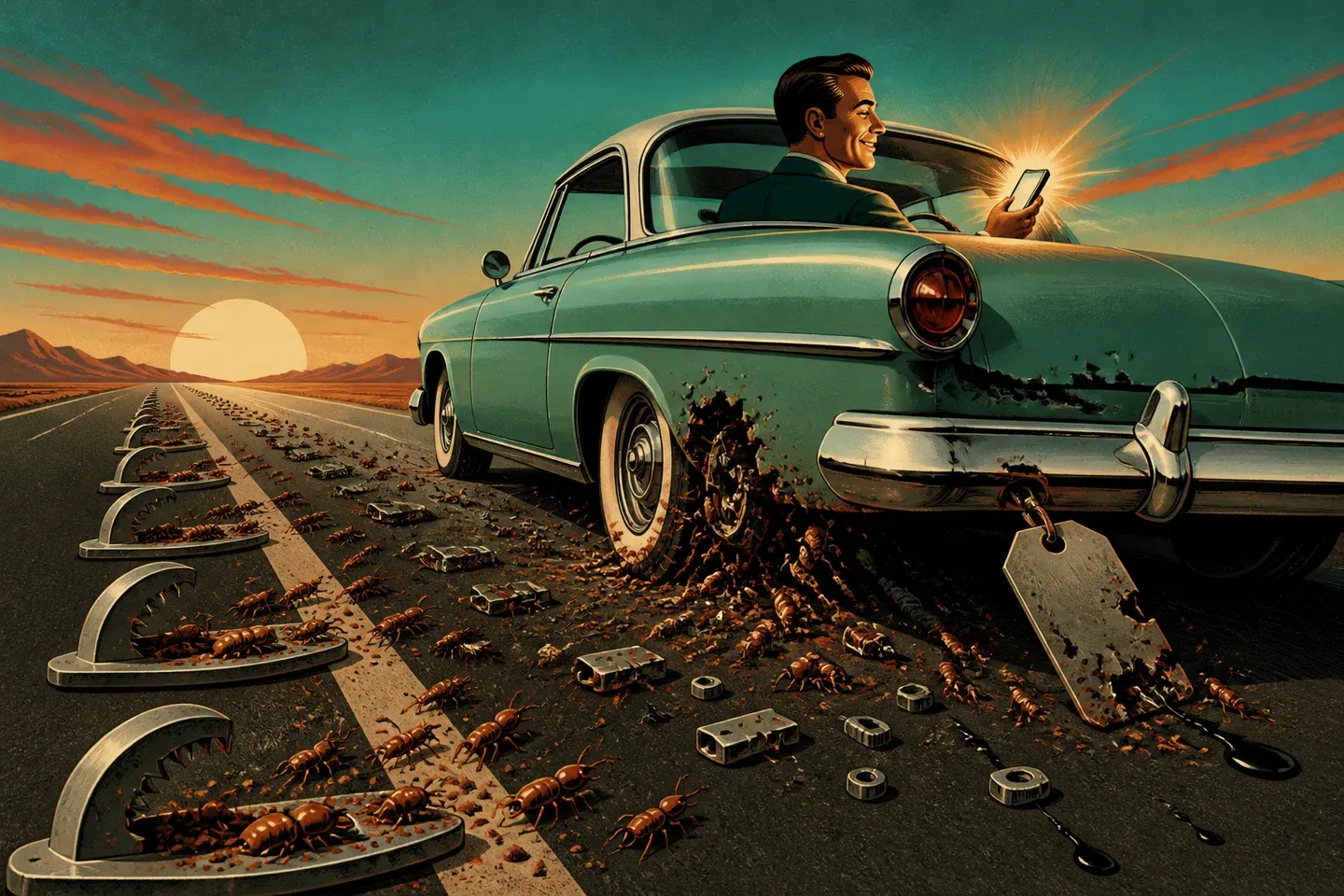
The odometer was charging admission the whole time.
Algorithmic Management, Now With Less Eye Contact
This is an old piece-rate arrangement dressed in a hoodie and handed a GPS.
Workers are paid per completed ride or delivery. The risk of waiting for work lands on the person waiting. Instead of a supervisor with a clipboard, there are surge maps, streak bonuses, quests, ratings, dispatch systems, acceptance metrics, and the possibility of deactivation.
The app does not need to yell, “Work harder.” It can flash a bonus three trips away and let a person with bills make the obvious calculation.
That does not mean every shift loses money. Someone with an already-owned, fuel-efficient car who works only high-demand windows may do well. A surge or generous tips can make a night worthwhile. Immediate cash and schedule control have real value, especially when conventional jobs have made themselves incompatible with being a human being who occasionally needs to exist outside the workplace.
But those are reasons to track the work carefully—not reasons to stare at the gross payout and declare victory.
The numbers that matter are:
-
net income per total hour, including waiting and car-related tasks
-
net income per total mile, including unpaid miles
-
actual operating costs, not just fuel
-
taxes due later
-
looming repairs, loan payments, and shrinking vehicle life
Cheap Rides Are Not Cheap. They’re Just Billed Later.
Platforms do have costs: software, marketing, payment processing, customer support, insurance in some situations, compliance, expansion. Nobody is claiming the app was assembled for free in a cardboard box.
But its most tangible operating asset is often privately financed. The driver supplies the fleet vehicle. The company directs the demand. When the car fails, the platform’s system keeps functioning; the driver’s income may not.
That is the bargain buried beneath the low fare and the five-dollar burrito delivery: some of the true cost has been postponed and assigned to the person least able to negotiate it.
It appears later as worn tires, diminished resale value, an insurance complication, a tax bill, or a lost week after a mechanical failure.
“Be your own boss” sounds different once you translate it accurately:
You are responsible for the business expenses. We will let you know what the business pays after you have already bought the equipment.
A serious argument about app work should begin there: with upfront pay information, fair treatment of logged-in time and work-related miles, portable benefits, and a real process before someone loses access to their primary market overnight.
Those changes would cost money. So does the current system.
It just has the decency—or the cowardice—to mail the bill to the driver.

Special delivery: the part where flexibility becomes expensive.