Your Dog Does Not Need a Farm-to-Bowl Origin Story
The Bison Is Grass-Fed; the Marketing Is Guilt-Fed


A dog can receive a refrigerated box of grass-fed bison pâté, presented with the visual dignity of a meal-kit delivery for a minor European duke, then go outside and try to eat a curbside object last seen in a police evidence bag.
This does not mean garbage is health food. It means dogs are opportunistic scavengers, not tiny food critics waiting to be impressed by your butcher-block aesthetic.
Yet the premium pet-food industry has discovered something extremely useful: if you make dog food look like it belongs in the refrigerator beside a $14 jar of artisanal pickles, people feel like better dog owners.
And honestly, who can blame them? The modern pet parent has been handed a permanent panic buffet:
-
Ingredient blacklists
-
Recall headlines
-
Cancer fears
-
TikTok nutritionists with a ring light and a grievance
-
The insinuation that buying kibble means you have abandoned your dog emotionally at a truck stop
A subscription box promising “fresh,” “human-grade,” “chef-crafted” nutrition is selling dinner, yes. But it is also selling relief. You did the loving thing. You found the good food. You are not one of those people with the bag.

Meanwhile, the concierge meal’s harshest critic has found a wet parking-lot glove.
The dog, meanwhile, is hoping there is a squirrel behind the garage.
Fresh food can be useful. Some dogs like it. Preportioned meals can help owners feed consistently. Higher-moisture diets may encourage water intake. Convenience is not a moral weakness; it is often how busy people keep a living creature fed on something resembling a schedule.
But none of that means a food is automatically nutritionally superior because it looks less like kibble and more like a hostage negotiation between Whole Foods and Instagram.
The important question is brutally unglamorous:
Does this food safely and reliably provide what this particular dog needs?
Not: Does the salmon look better than “chicken meal” to a human who has been trained to regard any unfamiliar noun as a chemical spill?
“Human-grade” can indicate that ingredients and the finished product meet applicable human-food standards for processing, storage, and transport. Fine. That is meaningful.
It is also not proof of nutritional superiority.
A food can be made under human-food standards and still be poorly balanced for a dog. A conventional kibble can be carefully formulated, controlled, and completely appropriate without a pastoral label promising that its duck once had dreams.
Dogs need amino acids, fatty acids, vitamins, minerals, digestible calories, and the right proportions of all of them. They do not need a livestock biography.
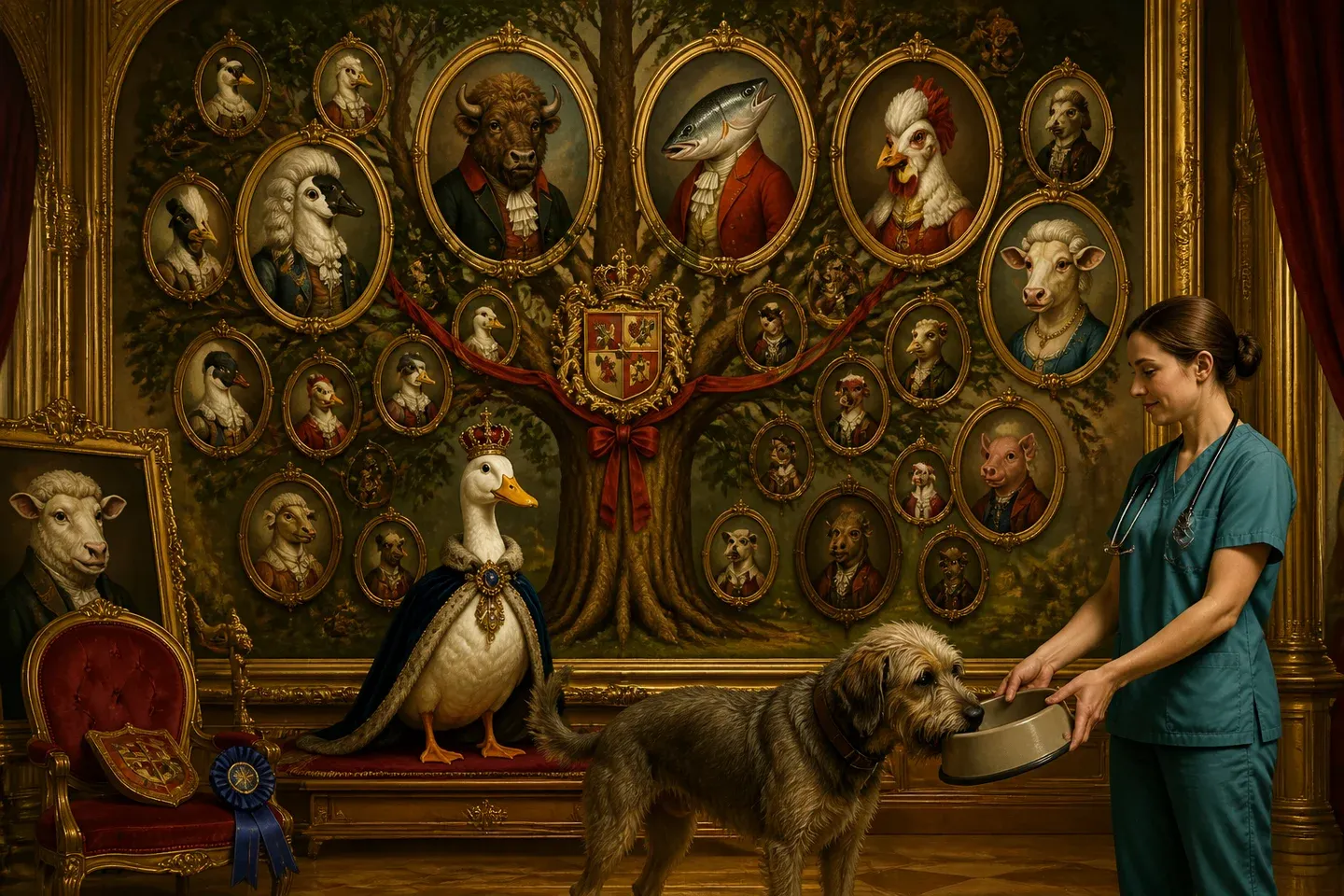
Nutritional requirements: protein, minerals, and absolutely no family crest.
| What the package says | What you still need to know |
|---|---|
Human-grade | Is it complete and balanced for the dog? |
Fresh or whole-food | Is it nutritionally consistent from batch to batch? |
Small-batch | Is the quality control any good? |
Chef-crafted | Did someone qualified in animal nutrition formulate it? |
Ancestral | Does it meet modern nutritional needs, or just sound like a wolf has a podcast? |
Ingredient Lists: A Gorgeous Way to Learn Almost Nothing
“Deboned salmon, sweet potato, blueberries” reads like a menu written by a person who owns linen napkins.
“Chicken meal” sounds like something a villain would serve in a basement.
But ingredients are not nutrients. Rendered meals can be concentrated sources of protein and minerals. Properly defined animal by-products can include nutrient-dense organs and tissues. The ingredient list alone cannot tell you whether a food is complete, digestible, balanced, or reliably manufactured.
The useful label language is the stuff no one wants to put in a TikTok unboxing video: the nutritional-adequacy statement.
For a dog’s main diet, look for language saying it meets AAFCO nutrient profiles for a particular life stage, or that its adequacy has been substantiated through AAFCO feeding trials. “Complete and balanced” does not mean every food is perfect for every dog. It means the food is intended to supply essential nutrients when fed as the sole diet for that stage of life.
That matters because a refrigerated pouch can look exactly like dinner while being a topper, treat, or intermittent supplement. Which is how somebody trying very hard to do right by their dog can accidentally build a nutritional deficiency out of adorable little containers.
Puppies, pregnant or nursing dogs, and adult dogs have different needs. Large-breed puppies, especially, need careful control of energy and mineral balance while growing. Your puppy is not a lifestyle brand collaboration. It is a rapidly assembling skeleton.
The Online Quiz Is Not a Vet Wearing a Polo Shirt
The personalized meal quiz is one of capitalism’s great little magic tricks: ask for a dog’s age, weight, activity level, and preferred protein, then imply you have entered the realm of clinical nutrition.
Those details can help estimate calorie needs. They cannot diagnose disease.
Be wary when a service invites you to identify “inflammation,” food allergies, chronic digestive trouble, or some other worrying condition—then presents its proprietary lamb-and-kale recipe as the answer. That is not individualized medical care. It is a sales funnel with a stethoscope emoji.
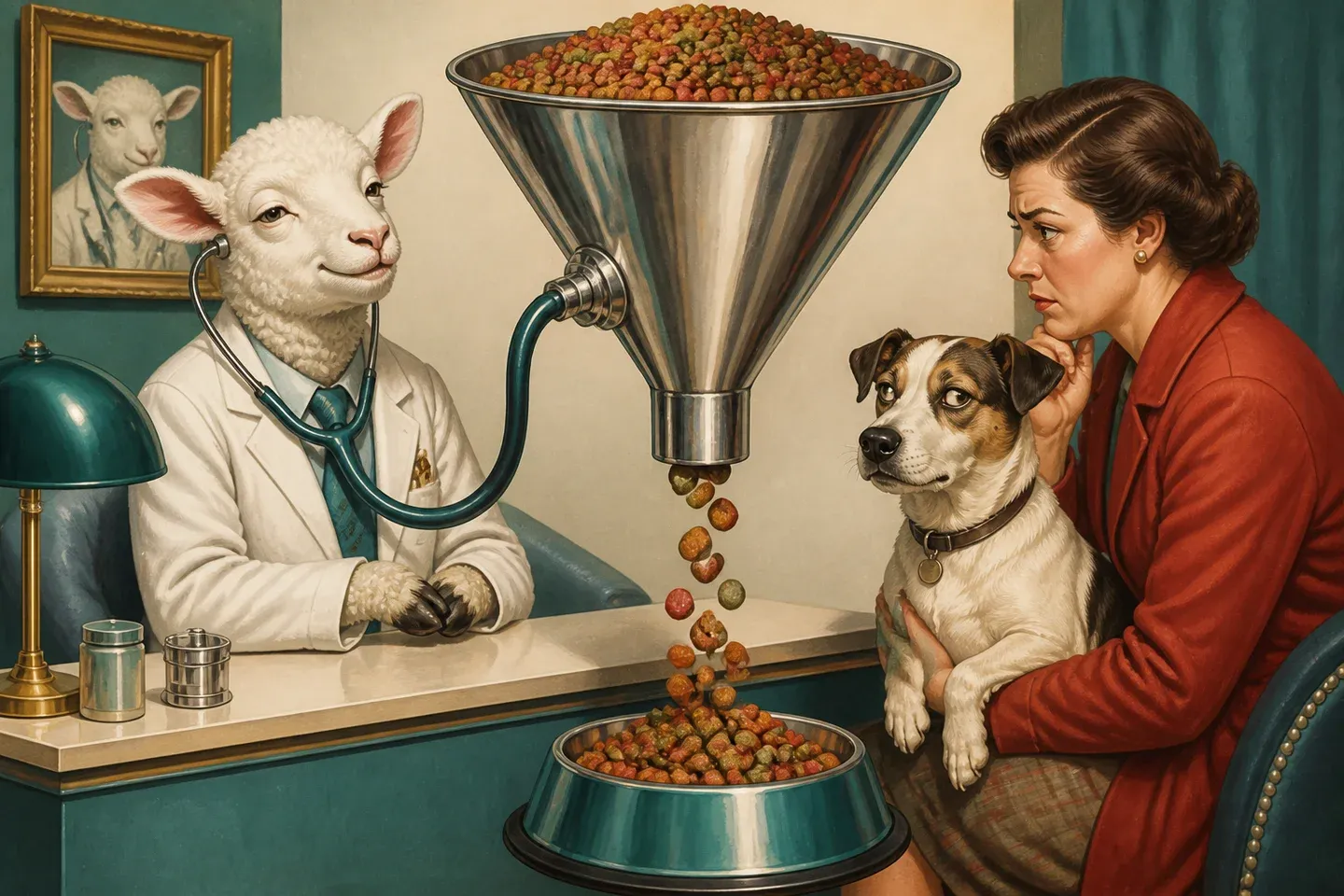
For an additional fee, the funnel listens to your concerns.
Dogs can seem better after a food change for plenty of reasons:
-
The owner starts measuring meals.
-
Table scraps and treats get reduced.
-
The dog leaves a food it did not tolerate well.
-
Someone finally makes a veterinary appointment.
Better stools, appetite, coat quality, or energy are worth noticing. They do not prove that “human-grade” turkey cured a mystery illness.
Persistent changes in weight, appetite, stool, skin, energy, or behavior deserve veterinary attention—particularly for dogs with pancreatitis, kidney disease, urinary disease, obesity, or gastrointestinal illness. Therapeutic diets are not wellness accessories. They are medical tools.
“Processed” Is Not a Diagnosis
Premium-food marketing likes to make kibble sound like it was manufactured in the same facility as foam insulation. The dark suggestion is simple: it is processed, therefore it is betrayal.
But cooking, canning, freezing, refrigerating, and extrusion are all processing. The question is what the process does to safety, nutrient retention, consistency, and adequacy.
Claims that kibble broadly causes cancer or chronic disease need stronger evidence than a slow-motion video of a golden retriever staring at a bowl while sad piano music plays. Canine cancer is multifactorial, involving age, genetics, breed predisposition, body condition, environment, and other influences. You cannot simply drag human research about ultra-processed food across species and declare the case closed.
The grain-free episode should have cured us of ingredient theology. The FDA investigated reports of dilated cardiomyopathy in dogs eating certain grain-free diets, particularly some high in peas, lentils, or potatoes. No definitive causal relationship has been established; the research remains complicated.
But the broader lesson was plain: “contains trendy thing” and “does not contain currently unfashionable thing” are terrible substitutes for nutritional evidence.
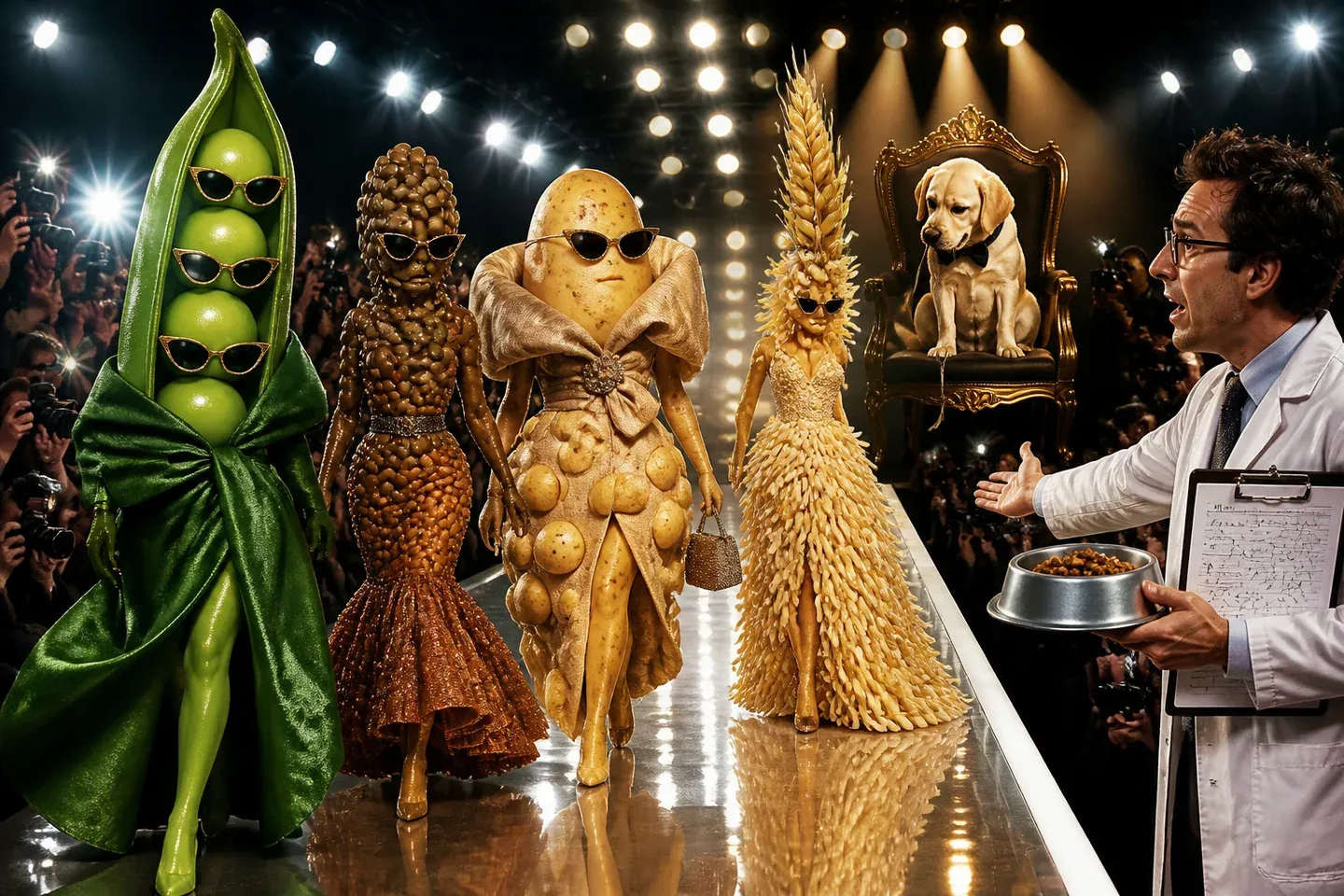
The runway show has no control group.
The Least Sexy Problem Is Usually the One Eating Your Dog
No format owns safety.
-
Refrigerated foods need proper cold-chain handling and storage.
-
Raw diets carry documented risks of bacterial contamination and pathogen shedding.
-
Homemade diets are often incomplete unless designed with qualified veterinary-nutrition guidance.
-
Every category can face recalls.
Premium branding is not quality control. Regulation is not a guarantee of excellence. What matters is formulation expertise, testing, manufacturing standards, transparency, and what a company does when something goes wrong.
And for many healthy dogs, the most established nutrition-related problem is not kibble, raw food, or the moral character of legumes.
It is too many calories.
A pricey fresh meal can be calorie-dense. A conventional complete diet can support a healthy dog perfectly well if portions are measured and treats, chews, and table food are counted. Maintaining an appropriate body condition will generally matter more than whether the package features a farmhouse, visible vegetables, or a chef apparently preparing dinner for your schnauzer after a difficult divorce.
Fresh food can be a sensible choice if your dog does well on it and you can afford it consistently. Compare complete diets by daily cost—or cost per 1,000 calories—not by holding a small topper pouch next to a full bag of dry food and pretending they are competitors in the same weight class.
Because the expensive food becomes less impressive when it causes an owner to stretch portions, underfeed, or replace a complete diet with decorative extras.
Buy the Boring Words
Good dog care is mostly unphotogenic:
-
Measured meals
-
Safe storage
-
Exercise
-
Dental care
-
Parasite prevention
-
Regular veterinary attention
-
Noticing when something changes
-
Following a therapeutic diet when one is prescribed
No one wants to post a glamorous carousel titled “We Kept Him at a Healthy Body Condition and Stored the Food Correctly.” But that is the work.
The responsible choice is not the food that makes you feel like you have hired a private chef for an animal that will eat a sock. It is the food that is complete and balanced for your dog’s life stage, made with credible nutritional and safety standards, appropriate to the dog’s health, and affordable enough to feed without turning every bowl into a household budget summit.

The delegate from Laundry has entered the negotiations.
Your dog is not judging the grocery cart.
The only creature persuaded by the freezer-pack morality play is you—which is why the most valuable words on the label are usually the dull ones.